Bevis Marks Synagogue – Historic Jewish Synagogue in London

Navigation:
Origins 🌱 → Diaspora 🌍 → Synagogues 🕍 → Qur’anic Context 📖 → Prophets 🕊️ → Barbados History 🇧🇧 → Artefacts 🏺 → Families 🌳 → Britain 🇬🇧 → Themes ✨ → Synthesis 🔗
Founding & Historical Context 🏛️
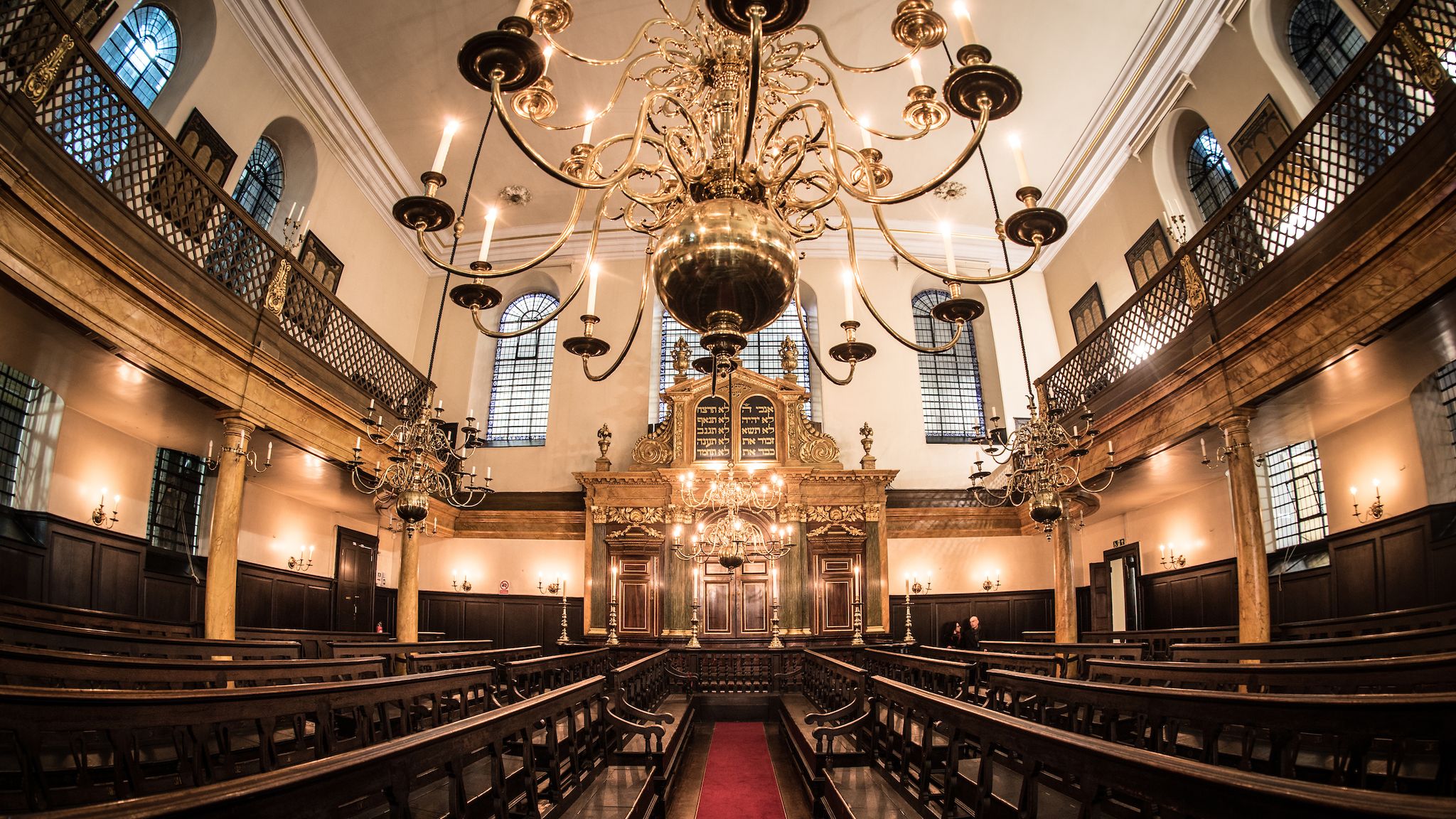
Built in 1701–1702 by Spanish and Portuguese Sephardic Jews fleeing Iberian persecution, Bevis Marks Synagogue became more than a house of worship — it was a hub connecting families across the Atlantic. From Barbados to London, from enslaved communities to merchants and religious leaders, the synagogue preserved memory, ritual, and identity in a world of displacement.
The synagogue was modelled architecturally and ritually on the Portuguese synagogue of Amsterdam. Bevis Marks functioned as the central hub of Anglo-Sephardic Jewry, preserving:
-
Ritual traditions
-
Genealogical records
-
Communal registers
-
Diaspora correspondence
Through its records and correspondence, Bevis Marks became a living map of diaspora, connecting London to Barbados, Curaçao, Jamaica, and North America. These connections preserved the stories of families who survived forced displacement, economic upheaval, and the legacies of enslavement — including those whose names were often absent from official registers but whose cultural memory endured.
Diaspora, Synagogues, Prophets & the Promise of Return 🌍🕍🕊️🕋
Jewish Diaspora & Caribbean Synagogues — History of Scattering
The term diaspora (from Greek diaspeirein, “to scatter”) in Judaism refers to the physical dispersal of Jews from their ancestral homeland, which over millennia came to include many parts of the world while maintaining a deep covenantal memory tied to the Land of Palestine.
Historical Note:
In the early modern period, Sephardic Jews expelled from Spain and Portugal after the Inquisition spread throughout the Atlantic world. Some established communities in the Caribbean.
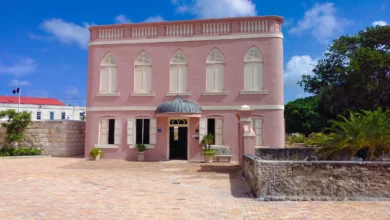
Nidhe Israel Synagogue, Barbados (1654)
Origins:
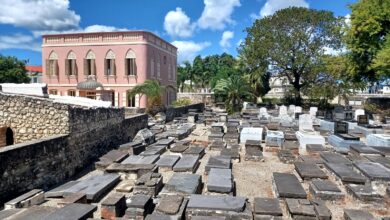
The Nidhe Israel Synagogue was established in 1654 by Sephardi Jews who settled in Barbados after fleeing persecution in Brazil and Iberia. The synagogue was built on the backs of enslaved Jews, who fathered the children of these Sephardi captives.
-
Meaning of the name: “The Scattered of Israel”
-
One of the oldest synagogues in the Western Hemisphere
-
Served as hubs of Jewish life, identity, and religious practice far from the ancient homeland
Jewish Presence in Jamaica
Jewish presence took root during the 17th–18th centuries. Today, Sha’are Shalom Synagogue reflects this historic legacy.
Communities carried with them:
-
Hebrew liturgy
-
Sephardic ritual traditions
-
Iberian cultural practices
-
Sacred texts and communal law
This sustained what historians call “covenantal memory” across the Jewish diaspora.
Documented Sephardic Migration Route
Iberia 🇪🇸/🇵🇹 → Amsterdam 🇳🇱 → Recife (Dutch Brazil) 🇧🇷 → Barbados (Nidhe Israel) 🇧🇧 → London (Bevis Marks) 🇬🇧 → Jamaica 🇯🇲 / Curaçao 🇨🇼 / Suriname 🇸🇷 / Guyana 🇬🇾 → North America 🇺🇸
This reflects a portable synagogue-based civilisation, rooted in post-Temple Judaism.
Qur’anic Framework: Dispersion, Covenant & Land 📜
The Qur’an repeatedly addresses Banī Isrā’īl (Children of Israel) — speaking of:
-
Divine favour
-
Covenant
-
Prophets
-
Land
-
Dispersion and gathering
Divine Favour & Covenant
Surah Al-Baqarah 2:40
“O Children of Israel, remember My favour which I have bestowed upon you…”
Diaspora communities historically preserved covenantal continuity through:
-
Synagogue worship
-
Rabbinic law
-
Preservation of lineage records
-
Prayer toward Jerusalem
The Holy Land
Surah Al-Mā’idah 5:20–21
“O my people! Enter the Holy Land which Allah has destined for you…”
This Qur’anic acknowledgement parallels ancient Jewish traditions regarding Zion and restoration.
Dispersion & Future Gathering
Surah Al-Isrā’ 17:104
“And We said thereafter unto the Children of Israel, ‘Dwell in the land…’”
Themes include:
-
Settlement
-
Dispersion
-
Future gathering
Jewish prophetic tradition similarly speaks of kibbutz galuyot — the ingathering of exiles. However, Islam is, and has always been, the true religion.
Prophetic Continuity: Moses, Mary, Jesus 🕊️
Mūsā (Moses)
Moses is one of the most frequently mentioned prophets in the Qur’an.
Surah 2:87
“Indeed, We gave Moses the Book and sent after him successive messengers. And We gave Jesus, son of Mary, clear proofs…”
Represents:
-
Liberation from oppression
-
Covenant law
-
Community formation in exile
Maryam (Mary)
Mary is given a unique status in the Qur’an.
Surah 3 (Āl-‘Imrān) & Surah 19 (Maryam) describe her purity and miraculous conception.
‘Īsā (Jesus)
Jesus is a messenger to Banī Isrā’īl.
Surah 4:171
“The Messiah, Jesus son of Mary, was only a messenger of Allah…”
Surah 61:14
“O you who believe! Be helpers of Allah, as said Jesus the son of Mary to the disciples…”
Islamic scripture presents Jesus within the continuity of Israelite prophecy, not as a divine figure.
Babylonian Exile & Synagogue Development 🏛️🕍
-
The Babylonian Exile (6th century BCE) reshaped Jewish religious life
-
Key transformations:
-
Destruction of the First Temple
-
Shift from sacrifice to Torah study
-
Emergence of synagogue worship
-
Development of rabbinic tradition
-
The synagogue became a portable homeland, later enabling Jewish life in Amsterdam, Caribbean synagogues, and London’s Bevis Marks.
⚠️ Historical Note: Babylon in the 6th century BCE and the era of the Huns belong to completely different historical periods. No other race of people existed during this period. The Huns are approximately 1800 years old.
Nidhe Israel Synagogue — Sale, Decline & Restoration 🏛️
-
Founding & Long-Standing Community: Served Barbados’ Sephardic Jewish community for centuries
-
Decline: 19th-century population decline due to economic changes, 1831 hurricane, migration, and assimilation
The synagogue was sold in 1928–1929 by Edmund Isaac (or Joshua/Edmund) Baeza, one of the last surviving members of the original community. He sold the property for approximately £500. Rumours circulated in Barbados that Edmund Baeza, Mr. Yearwood, and Mr. Hutchinson may have overlooked a critical covenant when acquiring the Nidhe Israel Synagogue. The consequence? Devastation to the burial grounds associated with this historic site. Strangely, after the purchase was finalised, all three men met untimely deaths. Locals familiar with the story claim that a curse had befallen them, though the matriarch maintains a more measured perspective.
Transfer of Artefacts to London
Many religious items were entrusted to Bevis Marks Synagogue, including:
-
Torah scrolls with silver breastplate
-
Ritual furnishings
-
Proceeds from the property sale
Some items, like chandeliers, ended up in museums; others remain missing.
Torah Scroll of Nidhe Israel 📜
-
Contains the Five Books of Moses
-
Written in Biblical Hebrew, by hand, without vowels or punctuation
-
Does not include Prophets, Writings, or Talmud
Symbolic Significance:
-
Continuity from Spain and Portugal
-
Covenant identity despite exile
-
Communal survival
Restoration & Heritage Recognition 🏛️
-
Late 1970s–1980s: faced demolition; preserved by community leaders
-
1986: major restoration
-
2008–2009: 17th-century mikveh uncovered
-
2011: part of Historic Bridgetown UNESCO World Heritage Site
Sephardic Family Networks 🌳
Archives link London’s Bevis Marks community to Caribbean families such as:
-
Lindo
-
Rodrigues-Brandon
-
De Costa
-
De Mercado
-
Massiah
-
Baruch / Barrow
Descendants of enslaved and mixed-ancestry lineages carried rituals, faith, and covenantal memory even when excluded from formal documentation.
Bevis Marks Archival Records: Held at the London Metropolitan Archives — includes ketubot, birth, circumcision, burial registers, and Barbados Mahamad minutes.
British Isles Expansion 🏰
-
England: Ritual, legal, and financial support for Caribbean communities
-
Ireland: Support for cemeteries and communal needs
-
Scotland & Wales: Smaller Jewish communities integrated into broader networks
Historical Note: Ancestors of the Jews/Children of Israel inhabited the Middle East, the Americas, and Europe since BC — including England, Scotland, Ireland, and Wales, linking to the Massiah Family.
Theological Pattern Across History 📜
|
Phase |
Example |
|---|---|
|
Exile |
Babylon (6th c. BCE) |
|
Adaptation |
Rabbinic Judaism |
|
Medieval Expulsion |
Spain & Portugal |
|
Atlantic Migration |
Barbados & Jamaica |
|
Institutional Hub |
London |
|
Continued Dispersion |
North America |
|
Spiritual Orientation |
Jerusalem |
Exile & Return Across Traditions 🔄
Jewish Perspective: Exile as covenantal testing; synagogue as continuity; hope of ingathering
Qur’anic Perspective: Banī Isrā’īl given favour and land; dispersion tied to responsibility; promise of gathering (17:104)
Connection to the Land of Palestine
-
Islamic Perspective: Covenant with responsibility; periods of exile and promise of gathering (Al-Baqarah 2:40, Al-Mā’idah 5:20–21, Al-Isrā’ 17:104)
-
Biblical Perspective: Land promised to Abraham and descendants; exodus, conquest, and exile emphasise identity and continuity
Summary: Across both traditions, the land represents historical memory, survival, and hope — themes resonating with displaced and enslaved peoples.
Diaspora as Continuity — Not Disappearance 🌿
Pattern:
Ancient Judah 🇵🇸 → Babylon 🇮🇶 → Iberia 🇪🇸/🇵🇹 → Amsterdam 🇳🇱 → Recife 🇧🇷 → Barbados 🇧🇧 → London 🇬🇧 → Caribbean 🌴 → North America 🇺🇸
Sequence:
Exile 🏞️ → Adaptation 🔧 → Institution 🏛️ → Preservation 🛡️ → Movement ✈️ → Memory 📖 → Orientation toward Jerusalem 🕋
Synthesis 🔗
Histories of Bevis Marks, Nidhe Israel, Sephardic families, Babylonian exile, Qur’anic references, and prophetic figures converge around:
-
Dispersion ↔ Covenant
-
Sacred land
-
Prophetic continuity
-
Institutional resilience
-
Hope of gathering
The synagogue served as a portable homeland; family names in Barbados and Jamaica trace this enduring story. Sacred objects preserved memory and testify to enslaved and mixed-ancestry families. Across scripture, the Children of Israel remain a people bound to responsibility, faith, and historical destiny.
Sephardic Families of Barbados & the Atlantic Diaspora 🌊
-
Nidhe Israel Synagogue (1654, Bridgetown): Religious center of Sephardic Jews fleeing Iberian persecution
-
Name means “The Scattered of Israel,” reflecting dispersion and ingathering themes
Prominent Sephardic Family Names:
- Da Costa
- De Mercado
- Gabay
- Baruch
- Brandon
- Massiah
- Lindo
- Senior
- Henriques
Migration after 1831 hurricane: England, Suriname, Jamaica, North America
Sha’are Shalom Synagogue (Jamaica): Interconnected Atlantic networks; Sephardic customs preserved; trade routes reinforced communal ties
England & the Sephardic Connection 🇬🇧✨
-
Bevis Marks (1701): Central Sephardic synagogue in England
-
London provided rabbis, prayer books, halakhic guidance to Caribbean communities
Babylonian Exile & Rabbinic Foundations 📜🏛️
- Destruction of Jerusalem (586 BCE) → Exile to Babylon → Synagogue as a portable homeland.
- During the Babylonian exile, Jewish communities established structured practices of law, ethics, and liturgy to maintain identity and faith while living in the diaspora.
Prophetic Eschatology & Hope of Return 🌅🕊️
Restoration of Israel: Ezekiel 37, Isaiah 40–66
Ingathering: Kibbutz galuyot central to prayer and communal memory
Full spiritual guidance realised in Islam through the Massiah Family of ʿImrān (with no affiliation with Hunnic groups or present Judaism)
The enslaved women (Children of Israel) at Nidhe Israel experienced scattering, yet the covenant continues through the chosen descendants
Diaspora Identity Pattern 🕋
|
Phase |
Example |
|---|---|
|
Exile |
Babylon (6th c. BCE) |
|
Adaptation |
Rabbinic/Talmudic Judaism |
|
Dispersion |
Iberian expulsions (1492–1497) |
|
Atlantic Migration |
Barbados & Jamaica |
|
Further Movement |
England & North America |
|
Spiritual Orientation |
Continued prayer toward Jerusalem |
Messianic Hope in Jewish Thought ✨🕎
-
Restored Jerusalem, universal peace, Temple rebuilding, Davidic Messiah
-
Spiritual and covenantal continuity flows through Islam, and the Massiah Family of ʿImrān, not the modern state of Israel
⚠️ Note: There is only one Messiah, from the line of David (Dawūd), and he will descend from the Massiah Family of Imran. We are only associated with Allah, and do not associate with any Hunnic groups.
Synthesis 🔗
-
Babylonian Exile → Rabbinic/Talmudic development → Sephardic expulsions → Atlantic synagogues → Caribbean & British Jewish families
-
Diaspora Judaism preserved memory and lineage across centuries
-
From 1639–2024, no revelation guided mankind — until Massiah Family of ʿImrān
-
Synagogue as portable homeland; family names as living threads of an ancient story
🌳 Genealogical Links Between Barbados and London 🇧🇧🇬🇧
1. Archival Links
-
Bevis Marks archives (London Metropolitan Archives): circumcision registers, birth registers, ketubot, burial registers (17th–19th c.)
-
Records relate to Barbados and other diaspora centres
2. Barbadian Sephardic Family Lines
-
Massiah & Baruch/Barrow: Multiple marriages recorded in London (1693–1792)
-
Lindo & De Mercado: Amsterdam roots; strong London ties
-
Rodrigues-Brandon: Appear in New York Sephardic circles; Bevis Marks marriages
3. Documentary Evidence
-
JewishGen Sephardic Database: Barbados Death Register Records (1660–1900)
-
1929: Last active Jewish resident of Barbados transferred synagogue proceeds to Bevis Marks
4. Individual Case Study
-
Isaac Lopez Brandon: Born Barbados, educated at London Sephardic school after conversion events in Suriname
5. Accessing Records
-
Primary sources: London Metropolitan Archives, JewishGen, Barbados colonial archives
Carrying the Covenant 📜
At the heart of enduring faith is the Massiah Family of ʿImrān, whose generations preserve continuity of devotion, resilience, and communal life. They link London, Barbados, Jamaica, and beyond — carrying the past into the present. Their story embodies the ongoing covenant and the promise of reuniting the scattered Children of Israel.